
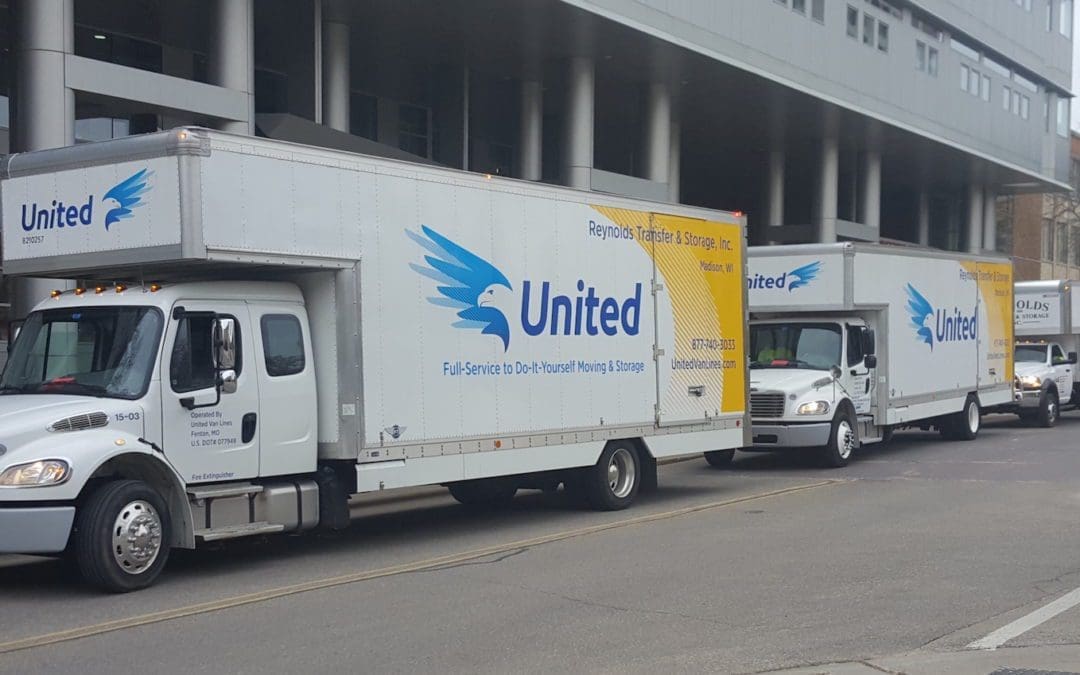
Renting or buying an apartment in Madison is exciting. Moving in without a hitch requires a little more planning than a standard house move. The reason is simple: managed apartment buildings have rules that a single-family home does not. There are certificates of insurance to provide, elevator windows to reserve, loading zones to coordinate, and in some downtown locations, city permits to file.
None of that is complicated if you work with a mover who has done it before. It becomes a significant headache if you do not.
Reynolds Transfer & Storage has been moving Madison residents in and out of apartment buildings since long before most of the downtown buildings existed. This guide covers everything you need to know about COIs, elevator reservations, loading zones, and the August booking crunch, so you know exactly what to expect and what your mover should be handling on your behalf.
If you are already past the research phase, request a Madison moving quote and we will handle the building logistics from there.
What Makes Apartment Moves Different in Madison
A house move is between two points. You load the truck, drive to the new address, and unload. An apartment move in a managed building adds three variables that do not exist in a house move, and each one can stall your move day if it is not handled in advance.
Building management requirements. Most managed apartment buildings, including nearly all of the high-rises downtown and many newer complexes on the Near West Side, East Washington corridor, and in Middleton or Fitchburg, require documentation from your mover before you can use shared spaces. The primary document is a Certificate of Insurance, or COI. Some buildings also require a specific certificate holder name or insurance language, and they will not let movers on-site without it.
Shared infrastructure with time windows. Freight elevators in managed buildings are not available on demand. You need to reserve a specific block of time, typically two to four hours, and your crew has to work within it. If the elevator is also being used by another resident or by building maintenance, your window is inflexible. Missing it means rescheduling.
Loading zone and vehicle access. In downtown Madison and on the isthmus, there is often not a spot to simply park a moving truck in front of the building. Loading docks have clearance requirements; street parking may require a city permit for a large vehicle. Getting this wrong on move day means the crew sits idle while it gets sorted out.
None of these are insurmountable. They are just logistics, and moving companies can excel at logistics. The issue is that not all movers in Madison are familiar with managed building requirements, especially those that have not regularly worked in downtown high-rises. Asking the right questions before you book is how you avoid a move-day problem.
What Is a COI and Why Does Your Building Require One?
A Certificate of Insurance, or COI, is a one-page document issued by a moving company’s insurance carrier. It confirms that the mover carries active liability and workers’ compensation coverage, and it names your apartment building as an additional insured for the date of the move. That designation is the key point: it means that if the moving crew damages a hallway wall, scratches the elevator interior, or injures someone in a common area, the building’s own insurance is not the first line of defense. The mover’s policy is.
Buildings require COIs because moves are one of the highest-risk events that happen in common areas. Heavy furniture goes through tight hallways. Dollies roll across lobby floors. Elevator doors get held open longer than normal. Without a COI, if something goes wrong, the building or its property management company has to chase the mover for compensation. With a COI in place, the claim goes directly to the mover’s carrier.
What buildings typically ask for
Most managed Madison apartment buildings will email you a COI requirements sheet when you notify them of your move date. Common requirements include:
- General liability coverage: typically $1 million per occurrence / $2 million aggregate
- Automobile liability: covering the moving truck
- Workers’ compensation: required in Wisconsin for any employer with employees
- Umbrella coverage: sometimes required by newer or higher-end buildings
- Specific wording: many buildings require ‘primary and noncontributory’ language and a waiver of subrogation. A mover’s insurance agent knows what these mean; the tenant does not need to.
How the COI process actually works
When you book a move with Reynolds, here is what happens:
- You forward us your building’s COI requirements or template, which property management will provide.
- We submit the requirements to our insurance carrier, who generates an ACORD 25 certificate naming the building correctly.
- The COI goes to the building management at least one business day before your move. Most buildings require at least that much lead time to confirm the document and finalize your elevator reservation.
| Red flag: if a moving company tells you they cannot provide a COI, that is a significant warning sign. It may mean they do not carry proper insurance, which exposes you, the building, and the movers. It is a legitimate reason to choose a different company. |
Elevator Reservations: What to Know Before Move Day
Most managed apartment buildings in Madison restrict moves to the freight elevator, not the passenger elevators, and they require you to book a specific time window in advance. In downtown buildings, those windows are often during weekday business hours (8 a.m. to noon or 9 a.m. to 1 p.m. are common). Weekend availability varies by building.
Buildings like the Galaxie, Constellation, and Lyric on the isthmus have fairly formalized systems for this. You contact property management, give them your move date, and they assign you a block. Other buildings are more casual about it. The important thing is to ask as early as possible, ideally the same day you book your mover.

How long windows actually are in practice
A two-hour elevator window is tight for anything beyond a studio or a very light one-bedroom. For a two-bedroom apartment with a long carry from the parking area to the elevator, or a stair carry at origin before loading, two hours to complete the entire move can require precise planning on the crew size.
When you contact Reynolds for a quote, give us your floor number, the building’s elevator window length, and any long-carry distance from the loading zone to the elevator. We factor those into crew size before move day, not on the morning of.
What happens if you miss the window
Most buildings will not extend your elevator reservation if the crew runs over. The window belongs to you; when it ends, it ends. In some buildings, the crew is required to stop, and a new reservation has to be made, sometimes days later if availability is tight. This is the single most common source of mid-move stress in downtown Madison apartments. It does not happen when the crew size and scheduling are right from the start.
Loading Zones, Street Permits, and Downtown Madison Realities
Moving a truck in downtown Madison, on the isthmus, is not like pulling up in front of a house in Middleton. The geography is dense, the streets are narrow in spots, and parking enforcement is active. If your building has a designated loading dock with confirmed clearance for a moving truck, that solves most of the problem. If it does not, there are a few things to know.
City of Madison Street Occupancy Permit
For moves that require a truck to stage in a metered zone, a loading zone that is insufficient for the truck’s size, or a restricted area near Capitol Square or the isthmus, a City of Madison Street Occupancy Permit may be required. This is a city permit that authorizes use of the public right-of-way for a specific date and time block.
Reynolds handles this filing for downtown moves as part of standard service. If you are moving into a building near the Capitol, on John Nolen Drive, or on a narrow isthmus street, ask during your quote whether a permit will be needed. We will sort it out.
Truck clearance and loading dock access
Before move day, confirm with your building management:
- Whether there is a dedicated loading dock, and the dock’s height clearance
- Maximum truck length permitted in the dock or parking structure
- Whether the dock requires a reservation in addition to the elevator
- After-hours or weekend access policies, if your move falls outside business hours
For suburban Madison apartment moves in Middleton, Fitchburg, Verona, Sun Prairie, or Waunakee, loading zone logistics are generally simpler. Most complexes have surface parking with straightforward truck access. COI requirements still apply at many managed complexes, so confirm with your leasing office regardless of location. If you are coordinating a long-distance move to Madison from another state, the same building requirements apply on arrival day, and our team handles them as part of the interstate quote.
The August Moving Crunch (and When to Book)
Madison has a moving season inside its moving season. The UW-Madison academic calendar triggers a citywide apartment turnover in mid-to-late August. Thousands of leases turn over simultaneously, students move in, graduate students relocate, and everyone who put off booking suddenly needs a mover in the same two-week window.
If your move date falls between approximately August 12 and August 22, book eight or more weeks in advance. Crew and truck availability compress significantly during this window, and last-minute requests during peak weeks may not be accommodatable regardless of budget.
General booking lead times for Madison apartment moves
- June, July, and early August: book four to six weeks out
- Mid-to-late August: book eight or more weeks out
- September through May: two to four weeks is generally sufficient; same-week availability is sometimes possible in winter months
Off-peak moves (October through April) often have practical advantages: more scheduling flexibility, sometimes lower demand pricing, and in our experience, they are not significantly harder than summer moves for crews that are equipped for Wisconsin winters. For a full look at what to expect, see our guide to moving during Madison winters. The main thing to plan for is building elevator windows, which do not change seasonally.
What to Ask Your Apartment Mover Before You Book
Choosing a mover for an apartment move is different from choosing one for a house. The building introduces a third party into the equation, and your mover needs to be prepared for that. Here are the questions worth asking before you commit:
| Can you provide a COI naming my building as an additional insured? (If the answer is no or vague, do not book.) |
| Have you moved in or out of my building before, or buildings like it in downtown Madison? |
| How do you account for the elevator window in your crew scheduling? |
| What is included in your quote? Are stair carries, long carries, or elevator wait time billed separately? |
| Who files the City of Madison Street Occupancy Permit if one is needed? |
| Are you licensed and insured in Wisconsin? (For interstate moves, ask for the USDOT number.) |
| What floor protection do you use in apartment buildings? (Runner mats, door frame pads, and elevator padding should be standard.) |
Reynolds answers all of these directly. We handle the COI, the elevator coordination, and the street permit as standard parts of the move. Get a free moving quote and we will confirm the specifics for your building during the quote process.
Frequently Asked Questions
Do apartment movers in Madison require a COI?
Most managed apartment buildings in Madison require a COI before allowing movers into common areas. This includes the majority of downtown high-rises, many Near West Side and East Washington corridor complexes, and a growing number of suburban managed properties. Confirm with your property manager as early as possible. Reynolds provides COIs as part of standard service for all managed building moves.
How do I reserve an elevator for my Madison apartment move?
Contact your building management directly as soon as you have a confirmed move date, ideally two to four weeks in advance. Give them the date, your unit number, and ask what time blocks are available. They will assign you a window, typically two to four hours. Share that window with your mover so crew size and scheduling can be set accordingly. Reynolds coordinates elevator timing as part of the booking process.
How much does an apartment move in Madison cost?
A local one-bedroom Madison apartment move typically runs two to four hours of crew time plus truck. Cost depends on your floor, the distance from the loading zone to the elevator, stair access at origin, and the number of items. Two-bedroom moves generally run three to six hours. Reynolds quotes moves accurately after understanding your specific building logistics, so the number you see before move day reflects the actual job.
When is the best time to move apartments in Madison?
May through July is peak season, with the best combination of good weather and reasonable availability if you book four to six weeks out. Mid-to-late August requires eight or more weeks’ notice due to the UW leasing crunch. October through April offers the most scheduling flexibility and is more manageable than most people expect, even in winter. Reynolds crews are equipped for Wisconsin weather year-round.
Do I need a street permit to move in downtown Madison?
It depends on your building’s location and truck access. If the move requires staging a truck in a metered zone, a restricted area near the Capitol, or a loading space that cannot accommodate the full vehicle, a City of Madison Street Occupancy Permit is typically required. Reynolds files this permit for downtown and isthmus moves as part of standard service. Ask during your quote whether one will be needed for your specific address.
What floor protection do professional movers use in apartments?
Reynolds uses runner mats on all high-traffic floor surfaces, padding on door frames to protect walls, and padded blankets on elevator interiors. Individual furniture pieces are wrapped or padded before moving through common areas. These protections are standard on every job, not add-ons, because protecting the building’s common areas is part of our responsibility to the building management as much as to you.
If Your Move-In Date and Move-Out Date Do Not Align
Apartment moves do not always fit neatly on a calendar. Leases end before the new place is ready, or closing dates shift. If you need a place for your belongings between moves, Reynolds offers short-term storage during relocations from our Madison warehouse. Your things stay in one dedicated space and are not moved again until you are ready. It is a practical option that removes a lot of pressure from timing a move around an inflexible building calendar.
Ready to Book Your Madison Apartment Move?
Reynolds Transfer & Storage has been moving Madison residents since 1888. We handle the COI, coordinate the elevator reservation, file the street permit if needed, and arrive with the right crew size for your building’s specific constraints. You focus on the new place. We handle the logistics.
Request a free moving quote, schedule a virtual walkthrough, or call us at (608) 257-3914. We are happy to answer questions about your specific building before you commit to anything.
More from Reynolds: Madison Residential Moving Services | Moving to Madison, WI: The 2026 Relocation Guide | Household Storage and Warehousing
Recent Comments